[reading_time]
Part One of our South of France Series: Research and realistic expectations of Nice, France
If there’s one thing I can confidently say before you even book your flights to Nice, France it’s this. Don’t let anyone make you feel guilty for doing your research. Somewhere along the line, travel became all about spontaneity. Book the flights. Wander the streets. Find hidden gems. Eat wherever looks busy. Get wonderfully lost.
There’s certainly room for that kind of travel, and we’ve done plenty of it ourselves. But there’s something equally satisfying about stepping off a plane, looking around, and thinking to yourself, this is exactly what I imagined. That was Nice, France for us.
Before we travelled to the South of France, I found myself completely consumed by what my husband and I jokingly call The Toks. If there was a TikTok about Nice, chances are I’d watched it. Which is funny in it’s own right, because I rarely watched any Tik Tok videos before this trip.
Restaurants. Beach clubs. Accommodation. Hidden viewpoints. Train routes. Day trips. The best pastry. The best pizza. The best place to watch sunset. At one point I genuinely think my entire algorithm had relocated to the Côte d’Azur.
Now, before anyone rolls their eyes, let me explain!
I wasn’t watching influencers with million-dollar budgets or perfectly curated itineraries that almost always involved changing outfits six times a day. I was watching ordinary travellers much like me (and you).
People with shaky videos. People who’d accidentally ordered the wrong thing at a restaurant. People showing what the beach actually looked like at two o’clock on a Tuesday instead of sunrise when nobody else was there. People who simply shared their honest experiences.
Then I’d cross-reference what they were saying against Google reviews, Booking.com reviews, Reddit threads and travel forums.
It probably sounds obsessive. Maybe it was.
But after our trip to the Seychelles, I’d learnt something important. The better you understand a destination before you arrive, the less likely you are to compare your experience to somebody else’s.
That’s exactly what happened with Nice, France.
When people ask me whether Nice is worth visiting, they’re usually expecting either overwhelming praise or a list of complaints. The truth sits somewhere in the middle. Nice wasn’t better than I imagined. It wasn’t worse either. It was almost exactly what I’d imagined.
And I mean that as one of the biggest compliments I can give a destination.
Expectations aren’t the problem. Unrealistic expectations are
Travel has taught me that disappointment usually isn’t caused by the destination itself. It’s caused by the picture we’ve painted in our own heads before we get there. And trust me, I’m just as guilty of doing it.
It was only after our trip to the Seychelles that I realised how much our expectations shape our experiences. We arrive carrying a version of a place we’ve built from Instagram, travel blogs, movies, and other people’s highlight reels. Then, when reality doesn’t match that version exactly, we feel let down, even if the destination itself is incredible.
That’s why this post matters. Before I tell you what we did, where we stayed, or what I think you should see in the South of France, I want to share the mindset we now travel with. It’s a lesson we’ve learned over the years, and it has completely changed the way we experience new places. It has made us more present and far less likely to miss what’s right in front of us because we’re chasing an expectation that never really existed.
Social media gets blamed for this all the time, but I actually think that’s a little unfair. A reel isn’t trying to show you an entire holiday. It’s showing you thirty seconds. Of course it looks magical.
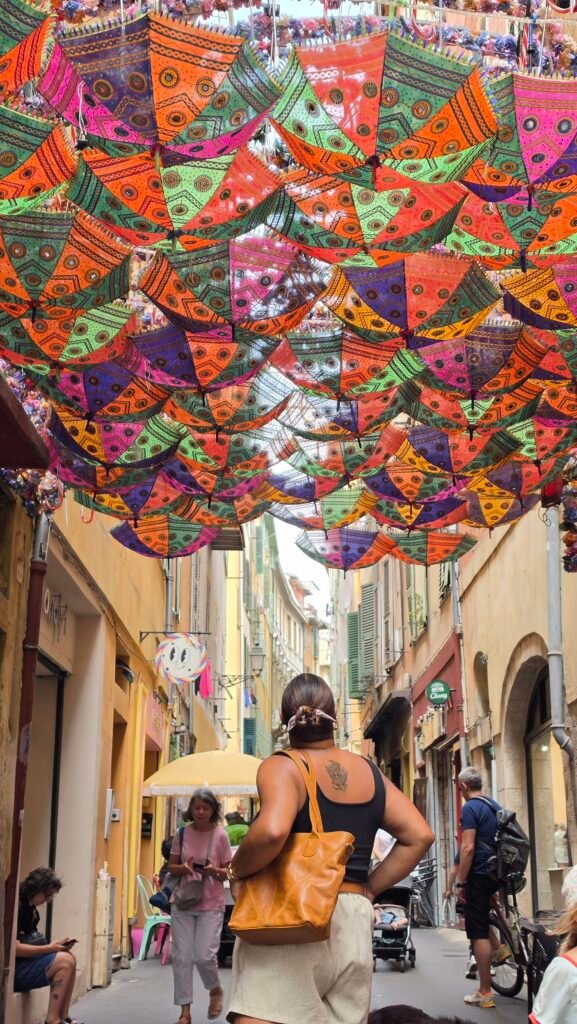
If you head over to my instagram when I post some reels from our trip, you’d see sparkling blue water, beautiful architecture, colourful streets, beach clubs and sunsets over the Mediterranean.
What you wouldn’t see is me standing in the supermarket comparing cold meat and cheese prices because food was significantly more expensive than we’d anticipated. You wouldn’t see the twenty-minute wait for a train. Or me trying to gracefully walk across a beach covered entirely in pebbles while questioning every decision that led me there.
Social media isn’t lying. It’s just incomplete.
That’s why I think it’s important to balance inspiration with research.
Watch the TikToks. Save the Instagram posts. Read the blogs. But also read the reviews written by ordinary people who just wanted to vacation for the memories, not the content.
They’re usually the ones who tell you the things that actually matter. Things like whether the hotel is noisy at night, whether the air conditioning works properly, or whether the “five-minute walk to the beach” is actually fifteen minutes uphill with luggage.
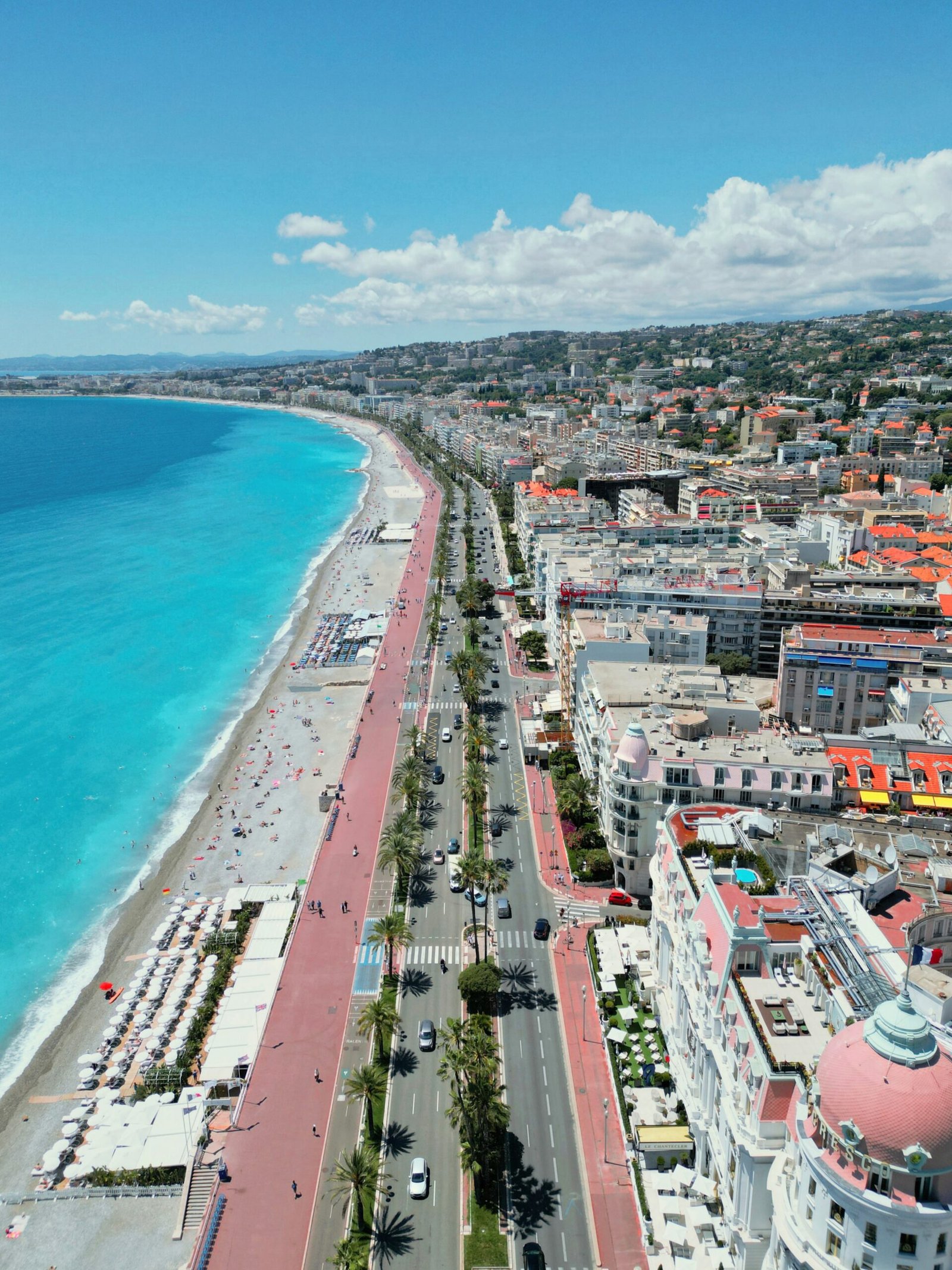
Those little details shape your experience far more than another beautiful drone shot ever will. And yes, I have to admit, we captured some gorgeous drone shots, but that doesn’t really tell the story, right? It simply gives you an aerial view.
For us, all that research paid off.
Almost everything we expected turned out to be true.
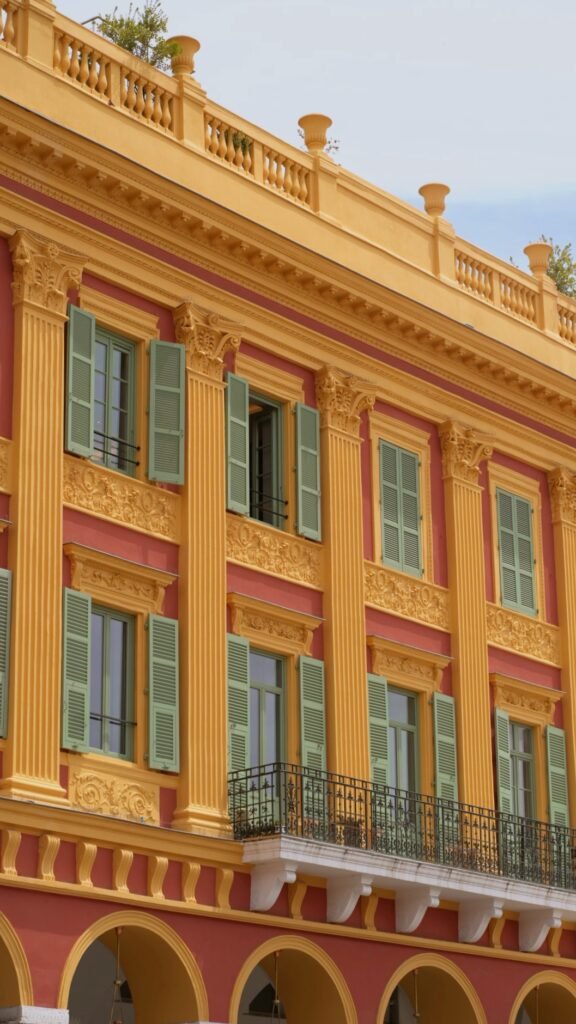
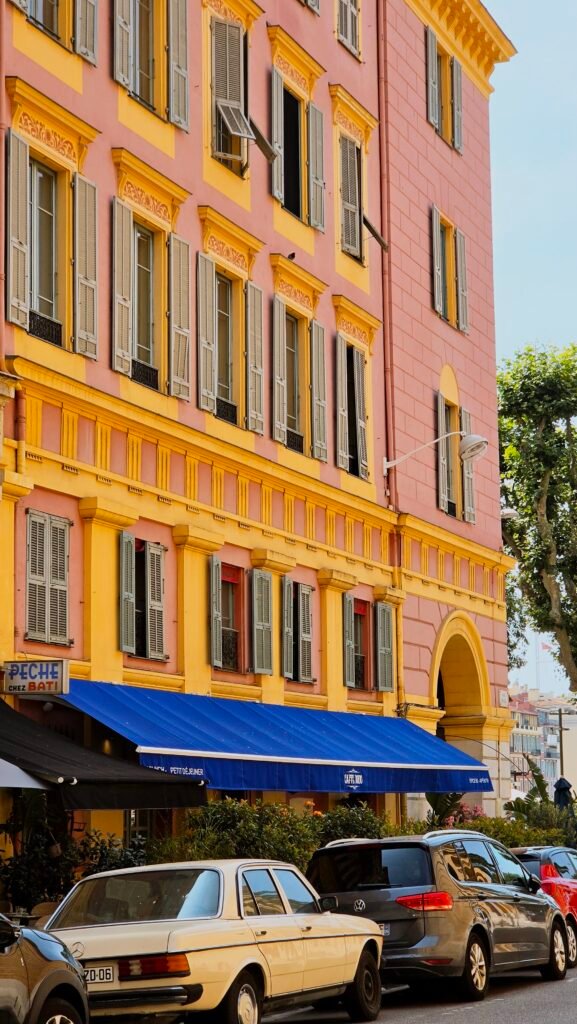
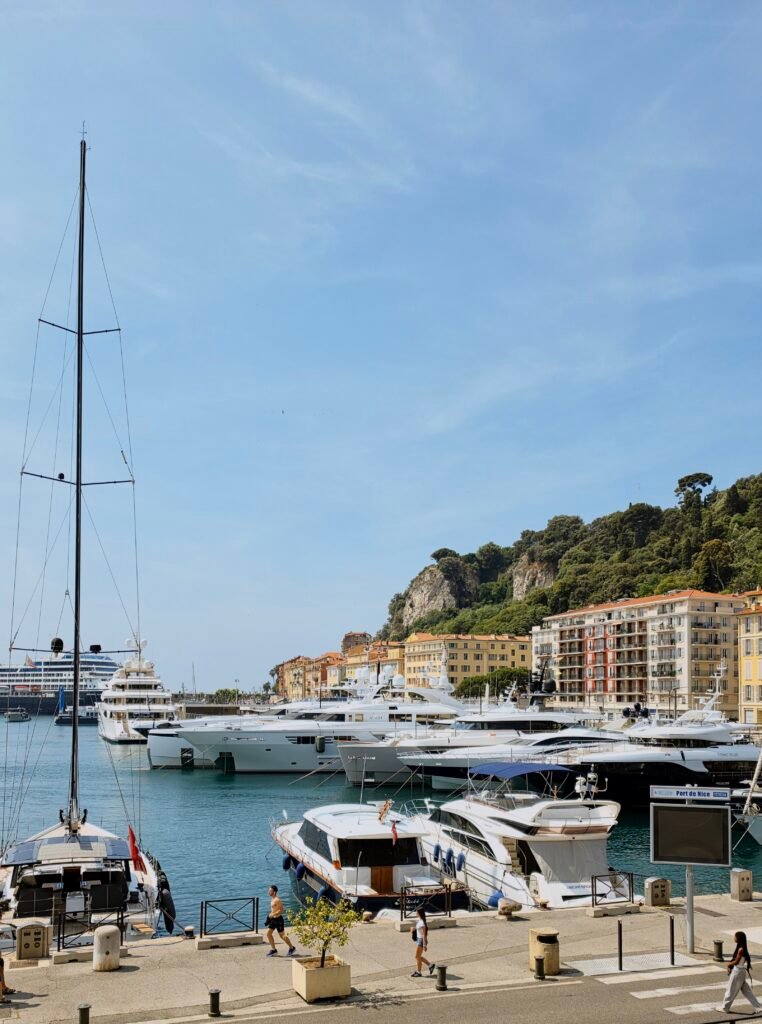
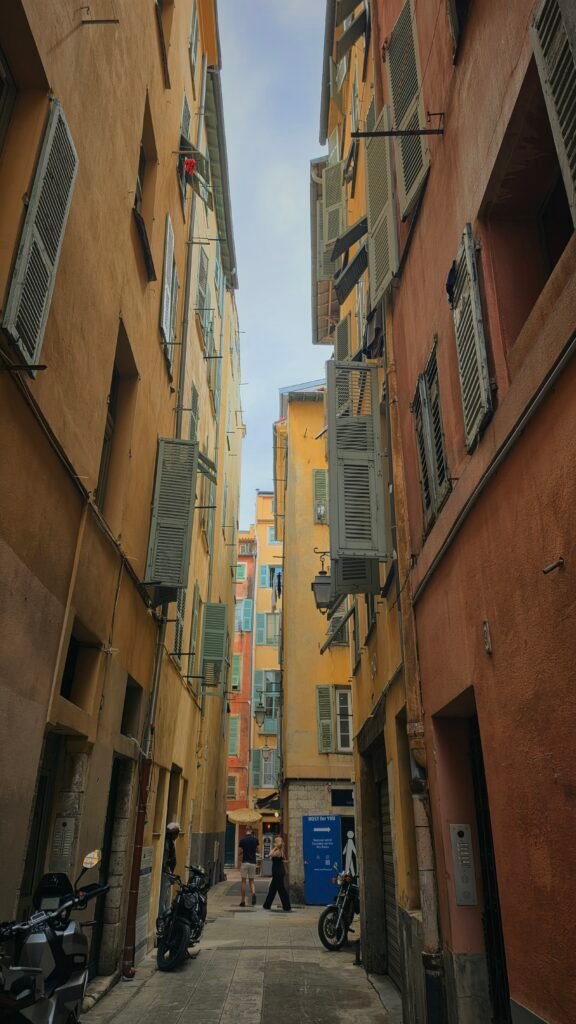
The beaches were beautiful. The old town was charming. The Promenade des Anglais was every bit as picturesque as we’d hoped. The city was incredibly walkable. Public transport was excellent. The atmosphere was relaxed.
The French were… well, French. Do with that what you must.
Nothing really surprised us.
Well… almost nothing.
Let’s talk about the water
It’s probably one of the first things you notice when you start researching Nice, France.
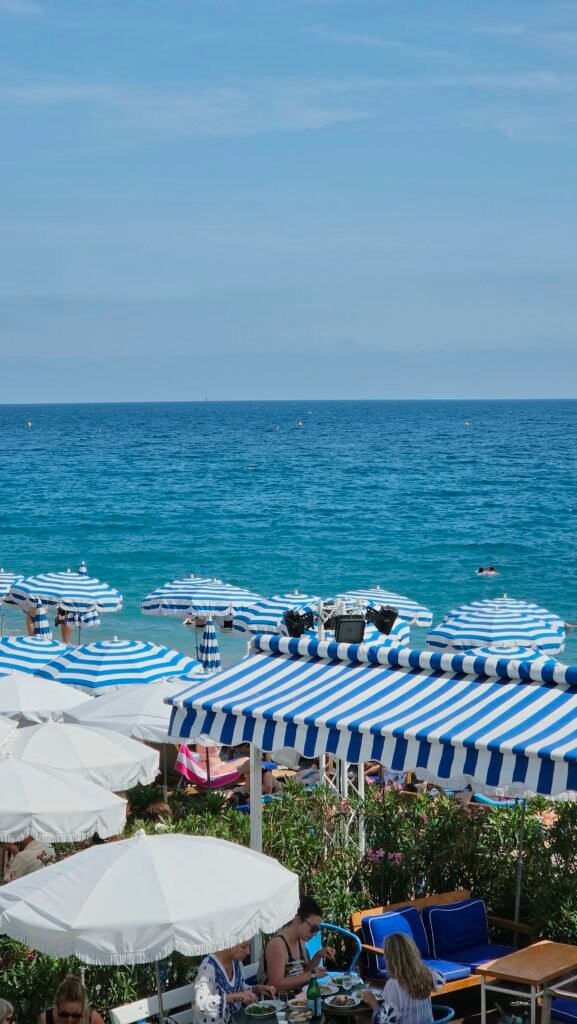
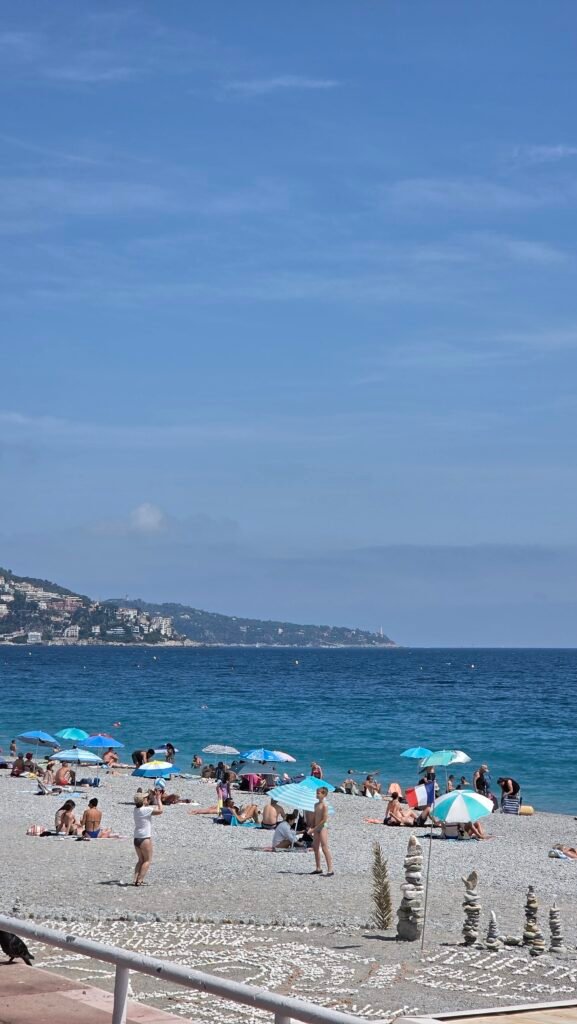
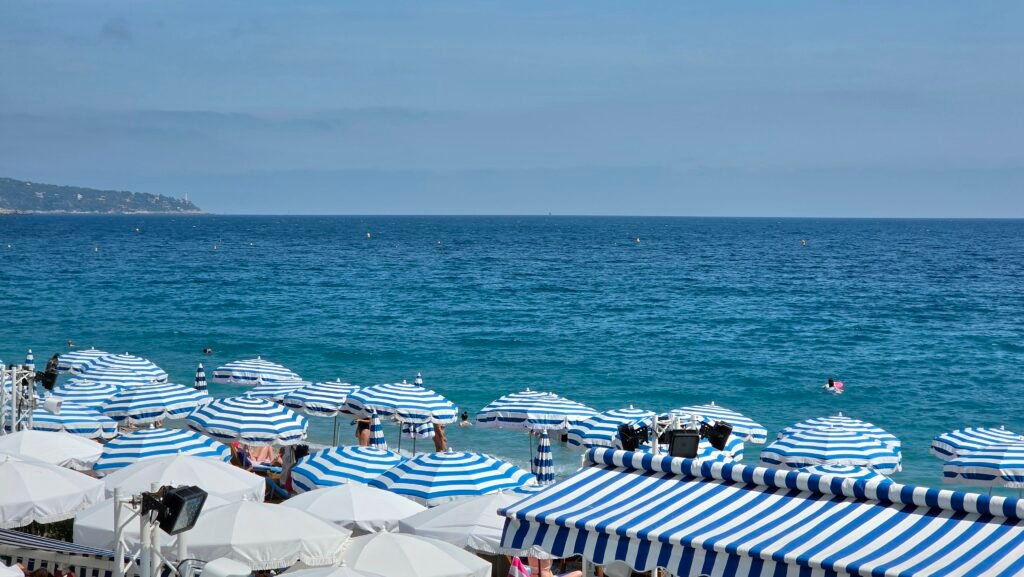
That impossible shade of blue. You know the one. The kind of blue that almost looks edited because surely water can’t be that blue.
I spent months wondering whether social media had simply turned the saturation up. Even though i’d seen water that blue before in other destinations. But I also know that most times my camera doesn’t capture what my naked eye does, and I have to turn up the saturation. Other times I just love how creative the shot feels when edited.
This time, it was blissfully accurate.
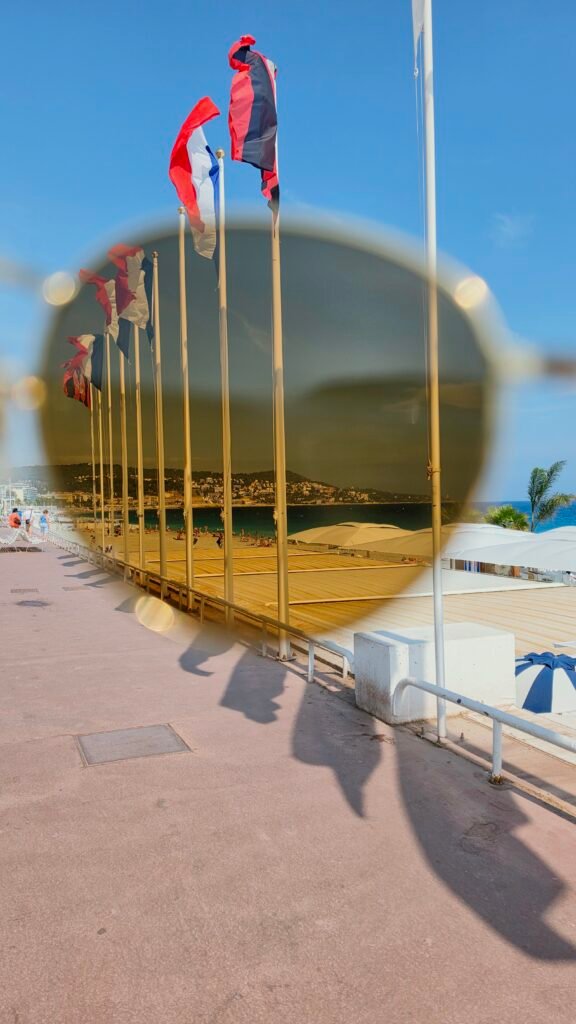
On sunny days, the Mediterranean really is that colour. Standing along the Promenade des Anglais for the first time felt strangely familiar because I’d seen that exact view hundreds of times before. Only this time there wasn’t a phone screen between me and the sea.
There was one thing I hadn’t fully appreciated though.
The weather makes a remarkable difference. During our stay we had two overcast days with a little rain. The sea was still beautiful. Still clear. Still unmistakably Mediterranean. But it wasn’t the bright turquoise we’d become so familiar with.
The same coastline looked softer. More muted. Almost silvery in places. That’s worth mentioning because photos often make it seem as though the water looks identical every single day.
It doesn’t.
Like most beautiful places, it changes with the light.
Another thing I hadn’t appreciated before visiting is that the colour of the water changes from town to town along the Côte d’Azur.
Nice, France had that bright Mediterranean blue everyone talks about.
Monaco surprised me. Larvotto Beach was crystal clear, but it wasn’t the same vibrant blue.
Antibes surprised me even more. If I had to choose my favourite beach day of the entire trip, it would probably be Antibes. From above, the water almost leaned towards green rather than blue. The beach itself was sandy, the water was calm, and the whole day felt completely different to our beach days in Nice.
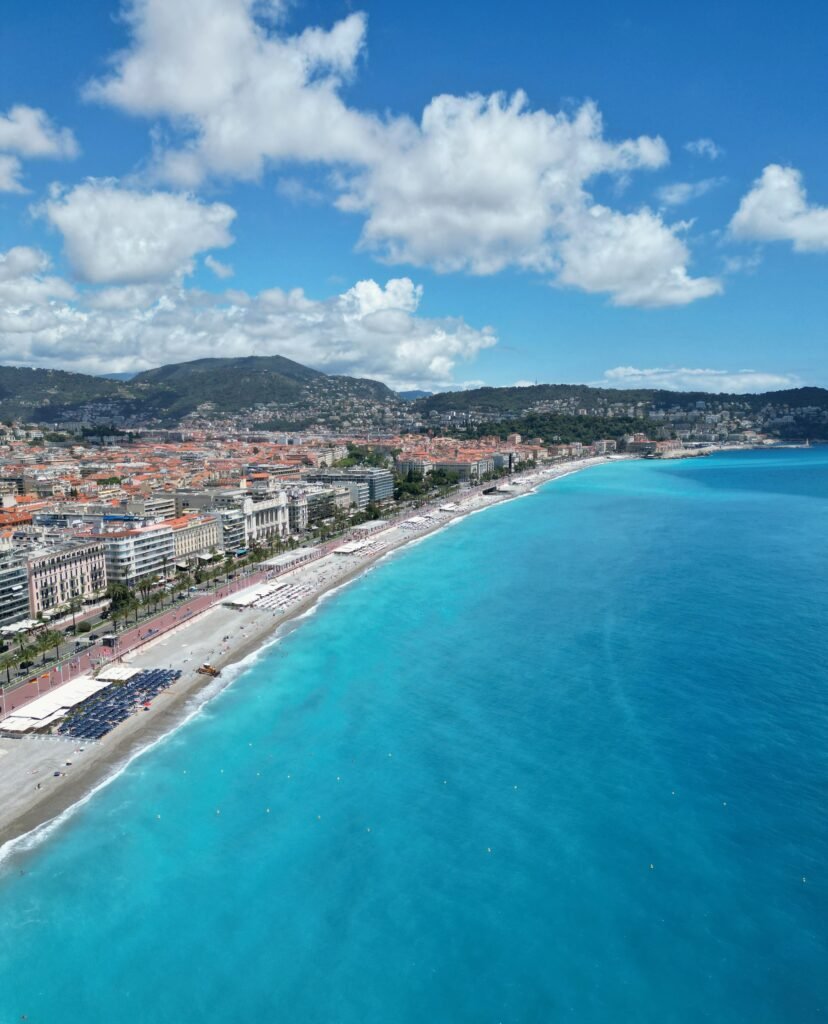
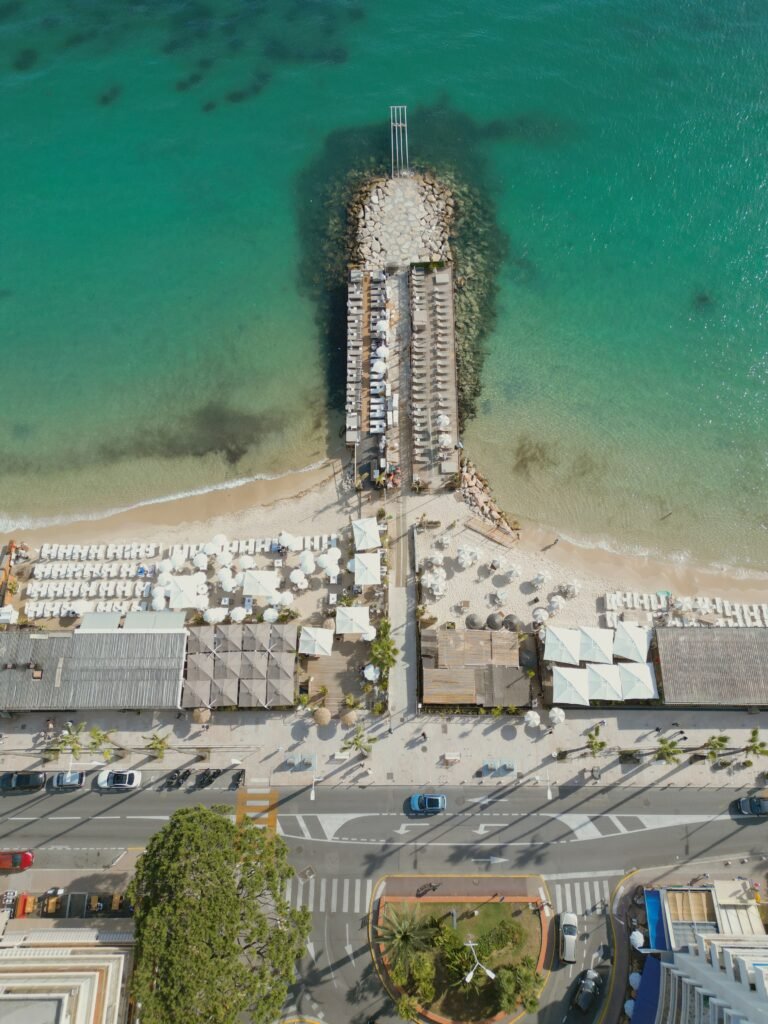
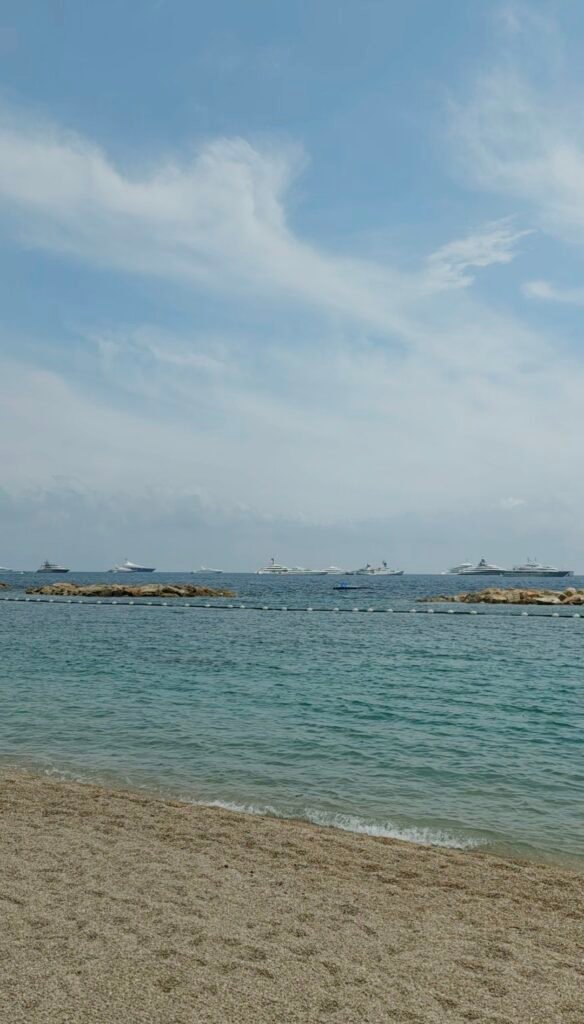
That’s one of the things I loved most about this coastline. Every town has its own personality. Every beach feels slightly different, but almost the same. It’s weird and wonderful all at the same time.
If you’re expecting every beach along the Côte d’Azur to look exactly like the photos you’ve seen of Nice, France, you’ll probably be disappointed. It’s worth researching all the towns you want to visit as day trips to manage your expectations.
If you appreciate each one for what it is, you’ll quickly realise they’re all beautiful in their own ways.
And while we’re talking about beaches… We need to have a serious conversation about the pebble beaches because I genuinely underestimated them.
Before we left, I’d watched countless videos where people warned about them, but I remember thinking people were probably being a little dramatic. “It’s just for content”, I told myself. Pebbles are pebbles, right? How bad can they really be?
Well… considerably worse than I’d anticipated.
Now, to be fair, we knew exactly what we were arriving to. We’d seen the photos, we’d read the reviews and we’d accepted long before boarding the plane that Nice, France wasn’t going to have the long stretches of soft golden sand at every beach. But knowing something intellectually and experiencing it for yourself are two completely different things.
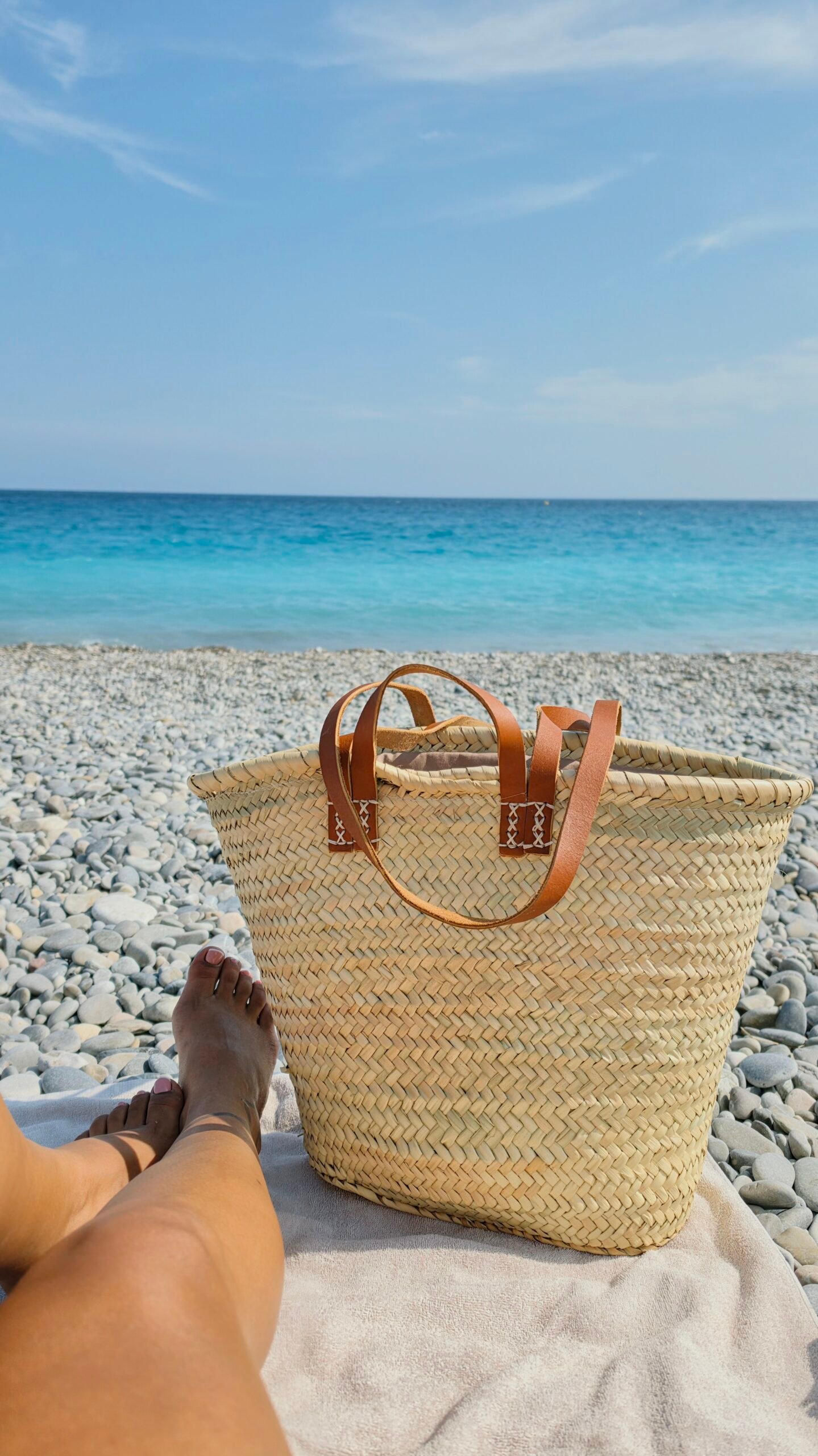
Walking across those pebbles barefoot is not for the faint-hearted. It’s like you’re trying to find the one rock that doesn’t hurt, except there isn’t one. Don’t let those smooth, pretty pebbles fool you. Then you finally make it to the water, only to discover that walking into the sea is somehow even more difficult because now the pebbles are moving underneath your feet while little waves are gently encouraging you to lose your balance. And because it’s the Mediterranean, the water isn’t exactly warm either, so you’re essentially fighting for your balance while simultaneously trying to summon the courage to actually get in. Laughing out loud as I’m writing this and visualizing seeing people get in and out of the water (including me).
I don’t think there was a single beach day where my husband and I didn’t look at each other and say, “Should we just buy the aqua shoes?”. Every time we decided against it.
Partly because we kept convincing ourselves we’d get used to it, and partly because I had already mentally allocated my spending money elsewhere. I wasn’t about to spend my handbag money on aqua shoes. At the time it felt like a perfectly reasonable decision.
So if there’s one piece of advice I’ll confidently give you (and me for next time), it’s this. Pack the aqua shoes before you leave home. They’re probably the least exciting thing you’ll put in your suitcase, but they’ll end up being one of the most useful.
The funny thing is, by the end of the trip I almost became fond of the pebbles.
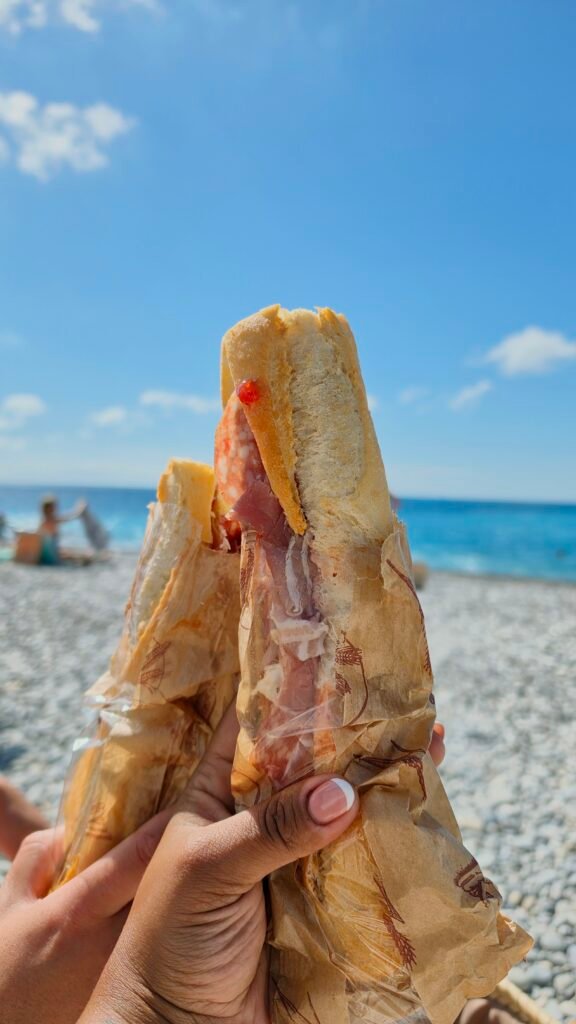
Not because they suddenly became comfortable, because they absolutely didn’t, but because they became part of the rhythm of Nice. We’d grab a pizza, pick up something sweet from a bakery, find a spot along the beach and simply sit there for an hour or two watching the world go by. The sound of waves rolling over pebbles is completely different to waves breaking onto sand. It’s difficult to explain until you’ve heard it yourself, but there’s something incredibly calming about it.
That’s probably the first time I realised Nice wasn’t asking us to constantly do something. It was inviting us to simply be there. And that brings me to something I don’t think social media explains particularly well.
Nice, France isn’t a sightseeing holiday. It’s a Mediterranean holiday. There is a difference.
When we first started planning this trip, I did exactly what I always do. I opened Google Maps, started dropping little pins everywhere and built an itinerary that would make the most of every day. Then I looked beyond Nice itself and realised just how many beautiful towns were sitting within easy reach.
Monaco.
Antibes.
Cannes.
Menton.
Èze.
Villefranche-sur-Mer.
Saint-Jean-Cap-Ferrat.
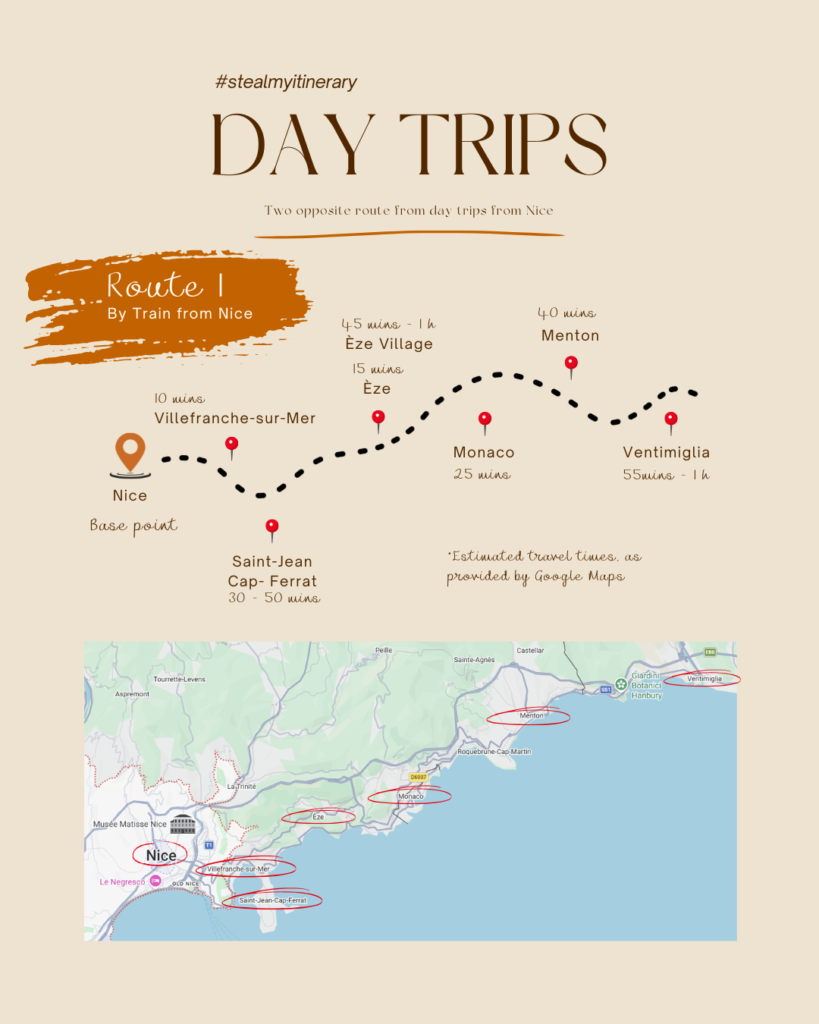
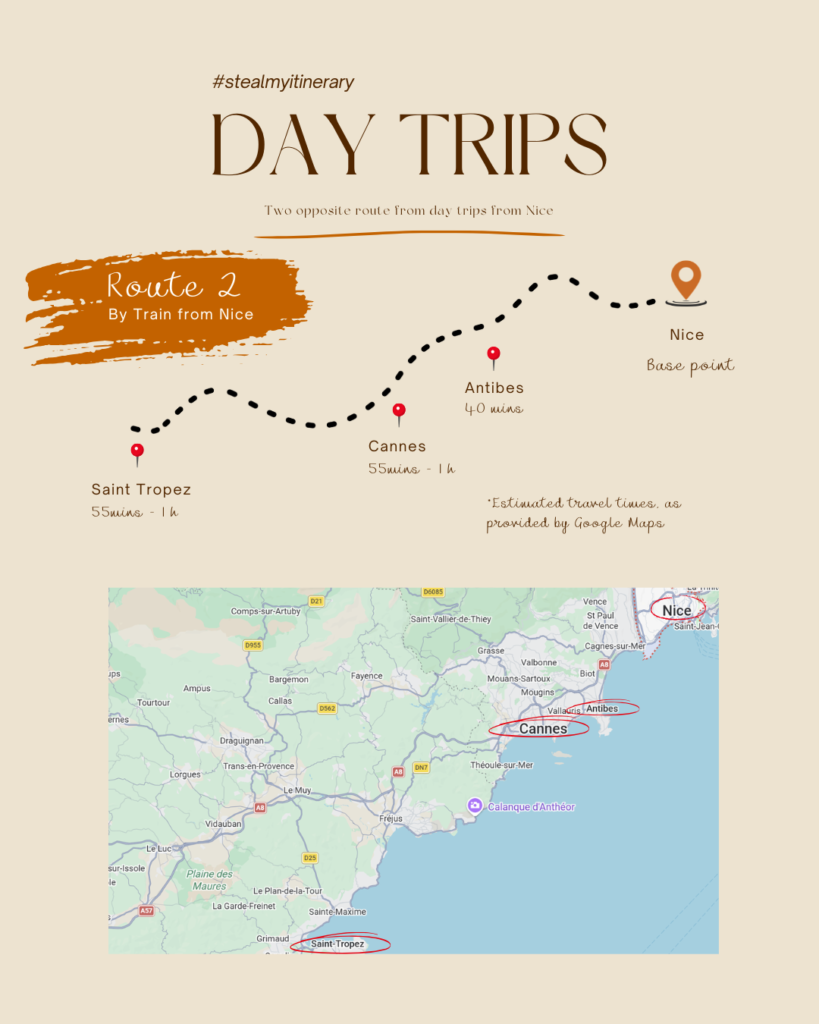
The above images are snippets from our initial itinerary
Suddenly my itinerary became less about Nice and more about trying to squeeze in as much of the Côte d’Azur as humanly possible. It looked fantastic on paper. Reality had other ideas.
You’ll read over and over again that getting around the Côte d’Azur is easy, and technically that’s true. The train system works well. The buses are affordable. You absolutely don’t need to hire a car to explore the coastline.
But I think the word “easy” deserves a little more context.
Easy is subjective. It’s easy if crowded public transport doesn’t bother you. It’s easy if standing shoulder to shoulder with strangers for forty minutes doesn’t make you anxious. It’s easy if you don’t get motion sickness. It’s easy if you don’t mind spending a large part of your day travelling.
For us, the transport itself wasn’t difficult. It was exhausting.
I remember one particular train to Monaco that was so full I genuinely couldn’t understand how another person was physically able to get on. Yet at every station more people squeezed themselves inside while almost nobody got off. At one point a woman reached above her head to grab what she thought was the support bar.
She grabbed my face instead.
I wish I was making that up. I kept trying to move her hand away while explaining that there genuinely wasn’t any more space. She kept trying to move further into the carriage, GRABBING MY FACE.
Long story short, I came dangerously close to fighting a middle-aged woman on the fourth day of our holiday. It’s funny now. At the time it really wasn’t.
That train ride was actually the moment everything changed.
We’d originally planned to visit nine different towns along the Côte d’Azur. After only two day trips, we quietly admitted to each other that we’d had enough.
Not because the towns weren’t beautiful. Quite the opposite. Every single one left us wanting more. The problem was that we were spending so much time trying to get to the next place that we weren’t giving ourselves permission to properly enjoy where we already were.
So we did something I almost never do. We abandoned half our itinerary. And stopped trying to see everything.
Instead, we slowed down.
We wandered through Old Town, Nice without looking at the time. Spent longer days on the beach. Walked the Promenade des Anglais with a “nowhere to be feeling” and just found ourselves wherever we were.
It was wonderful!
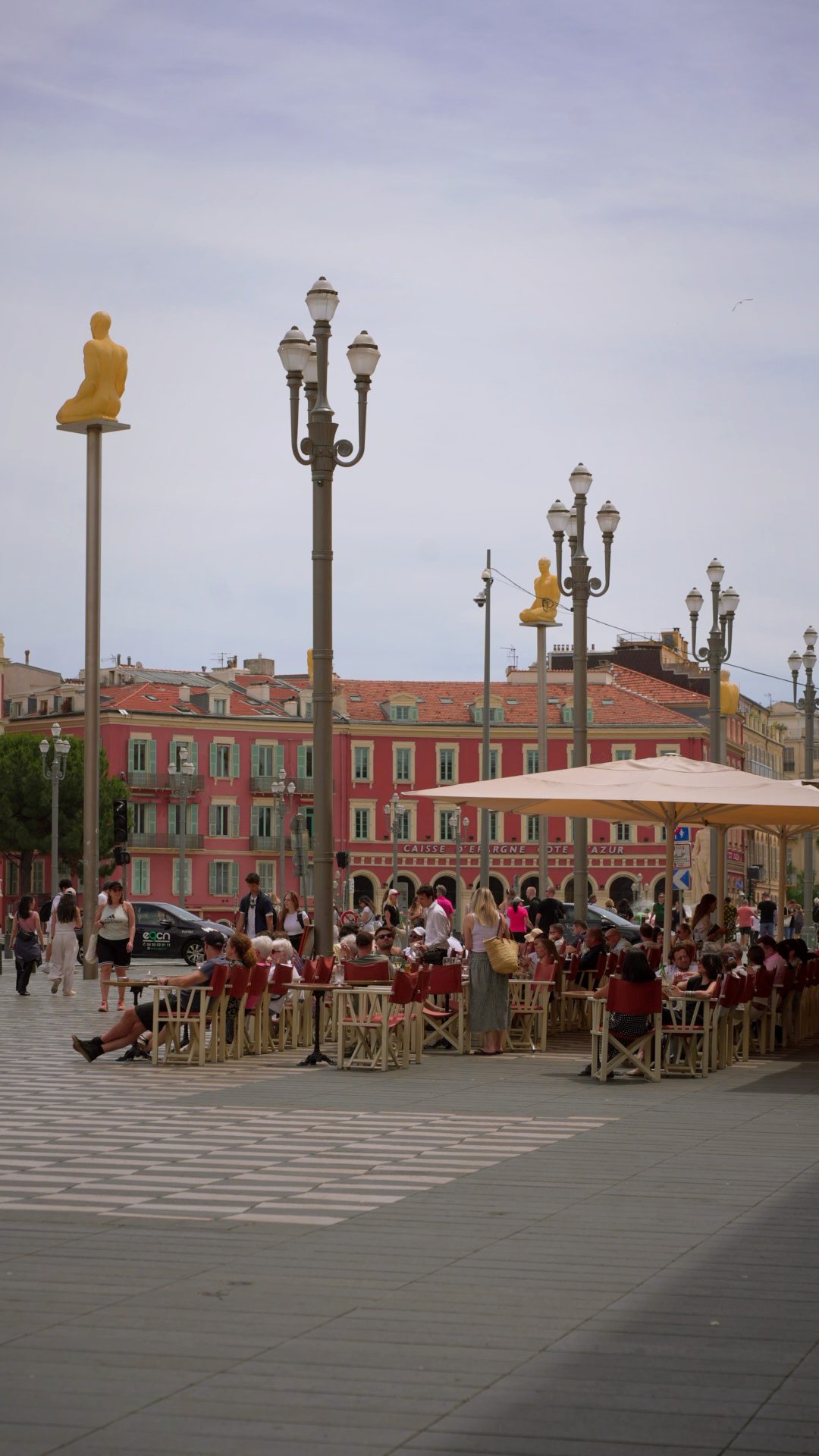
Some evenings we’d walk for over an hour without any destination in mind. We’d stop for gelato, people watch, browse little leather shops we’d already walked past twice before and discover something we’d missed.
Looking back, that was the holiday.
Not the day trips.
Not the attractions.
Not even the photos. It’s been over a month since the trip and I haven’t even posted any reels or photos from the trip. Yikes, I’m only sitting down now to write this blog post.
It was giving ourselves permission to stop trying to optimise every hour of every day. That’s when Nice finally made sense to me. It isn’t trying to compete with cities like Paris or Rome.
It doesn’t overwhelm you with world-famous landmarks around every corner. It doesn’t ask you to tick things off a list from sunrise to sunset.
Instead, it quietly invites you to slow your pace. To order another coffee. To take the longer walk home. To stay at the beach for another hour. To watch the sky change colour over the Mediterranean while eating a pizza, without feeling guilty that you’re not doing something more productive. Or ticking another monument off your “things to do” list.
And that’s exactly what made me fall in love with Nice, France.
If you asked me whether I’d go back, my answer wouldn’t even require a second thought. Absolutely. Yes!
In fact, I said to my husband while we were there that I could quite happily return to the South of France every single year and never get bored. Not because there are endless attractions. There aren’t. Not because the food was the best we’d ever eaten. It wasn’t. Not because everything was perfect. It wasn’t that either.
I’d go back because of the feeling. Nice has a way of making you feel like you’re exactly where you’re supposed to be. Unpretentious. Relaxed. Colourful. Loud and peaceful at the same time.
It’s as though it’s just busy enough to feel alive, but not so busy that it loses its charm.
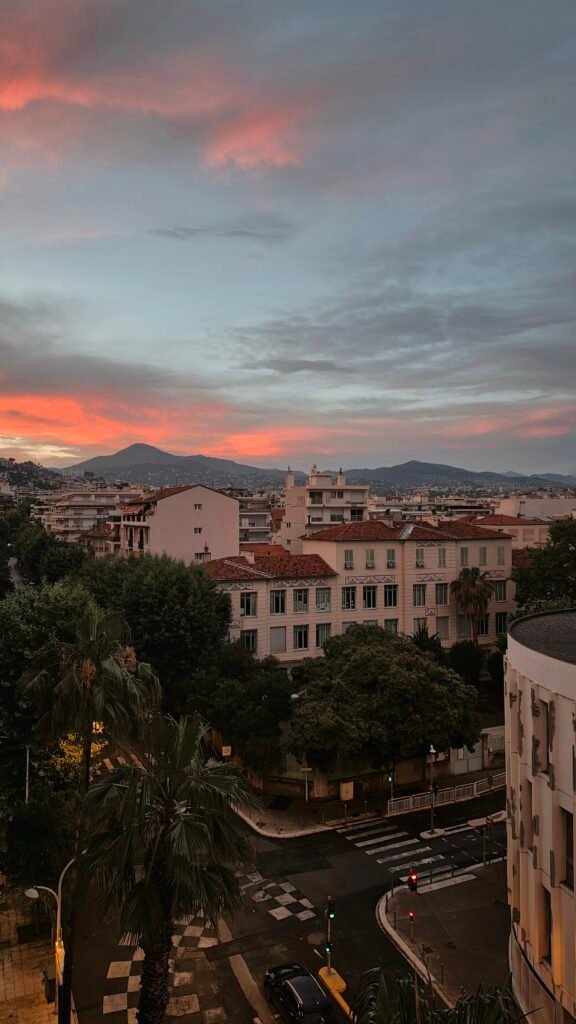
For us, it felt like one of those places that quietly leaves its imprint on you, and you don’t fully realize it until you’re home scrolling through your photos wondering when you’ll be back.
Sure enough, you might read a few different views on Nice, and that is exactly what this article is about. Doing your research and managing realistic expectations.
In the next part of this series, I’m going to share the things that genuinely surprised us once we were there. The costs we underestimated, where we think it’s worth spending your money, where I think you can comfortably save it, and the little decisions we’d make differently if we were planning exactly the same trip again.
Because while Nice was exactly what I expected, there were still a few lessons that only travelling there could teach us.
With love,
Keep #roamingwiththekolbes