Part Two of our South of France Series: Where We Spent, Saved and Splurged
If you’ve added Nice, France to your vacation bucket list, you’re probably doing some research on how expensive Nice is.
It’s actually quite a difficult question to answer because “expensive” is just as subjective as “easy”, as we shared in Part One. What’s affordable for one person might feel completely out of reach for somebody else, particularly if you’re travelling from a country where the exchange rate isn’t exactly in your favour. As South Africans, we’re always aware of that. Every euro spent isn’t just a euro. Somewhere in the back of your mind, you’re quietly converting it into Rands, even though you know you probably shouldn’t.
So rather than telling you whether I think Nice is expensive, I thought I’d share where our money actually went, what caught us by surprise, and where we felt every single euro was worth spending.
Before every overseas trip, I become slightly obsessive about planning our budget. My husband is very much the same, although his approach is far more structured than mine. As an executive in the finance industry, he likes knowing exactly where our money is going, and while we’re on holiday he keeps a live, itemised Excel spreadsheet tracking every expense as it happens. Between the two of us, we like having a clear idea of what our accommodation will cost, what transport is likely to cost and how much spending money we’ll need. We don’t plan because we want every day to be rigidly structured. We plan because we don’t enjoy financial surprises while on holiday.
Before we left for our Euro trip, I thought we’d planned quite well.
Looking back now, I don’t think our budget was unrealistic.
We’d just underestimated how quickly the little things would add up. And booooooy, do they add up!
We’d budgeted for flights, accommodation, transport and shopping. We even gave ourselves a little bit of breathing room because, let’s be honest, holidays have a funny way of encouraging impulse purchases.
What we didn’t fully appreciate was how quickly the little expenses add up.
Food was probably the biggest surprise.
Now, before anyone jumps into the comments to defend French cuisine, let me say this. This was simply our experience. Food is incredibly personal, and what we enjoy might be completely different to what somebody else enjoys. I personally know and have seen plenty of people online who rave about the food in France and Italy. We just didn’t have that experience.
It’s not that the food was bad. It wasn’t.
It’s just that it rarely made us stop halfway through a meal and say, “Wow.” There was literally one time during the entire Euro trip where that happened, and it was at the most unaesthetic Nonna’s eatery in Rome.
In fact, I remember feeling exactly the same way when we visited Paris in 2023. Everything looked beautiful. The ingredients were fresh, the presentation was lovely, but more often than not I found myself wishing for just a little more flavour. Perhaps we’re spoilt living in South Africa. We do seasoning exceptionally well, and we’re used to food that’s bold without trying too hard.
That being said, the biggest surprise wasn’t necessarily the taste of the food.
It was the cost.
My husband and I aren’t the type of travellers who order starters, mains and desserts. We also don’t drink much alcohol while travelling, so our restaurant bills were generally just two main meals, sparkling water and perhaps something soft to drink.
Most of the time, we’d spend somewhere between €40 and €70 for the two of us. And just to put that into perspective, these weren’t fine-dining restaurants. They were very normal, everyday places where you could sit down, have a meal and carry on with your day. Nice has a much wider price range than that, though. We walked past restaurants where individual dishes cost hundreds of euros, and then there were those slightly terrifying menus with certain dishes simply listed as “price on request”, or something like that. So when I say we were spending €40 to €70 for two people, I’m talking about the more ordinary end of the restaurant spectrum.
When you look at one meal in isolation, it doesn’t seem outrageous. It might even seem pretty reasonable. Maybe even cheap to some.
The problem is that holidays aren’t made up of one meal.
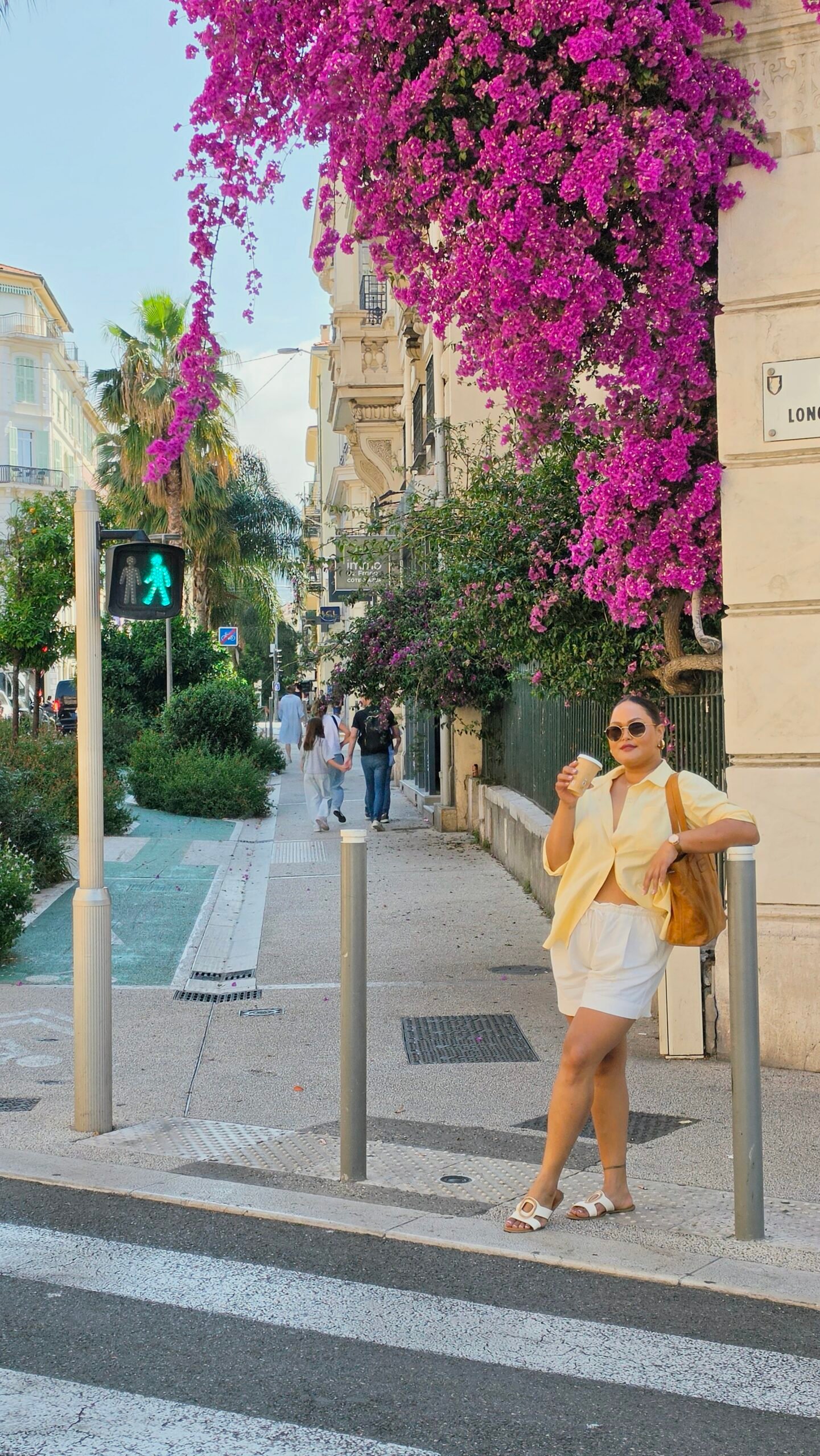
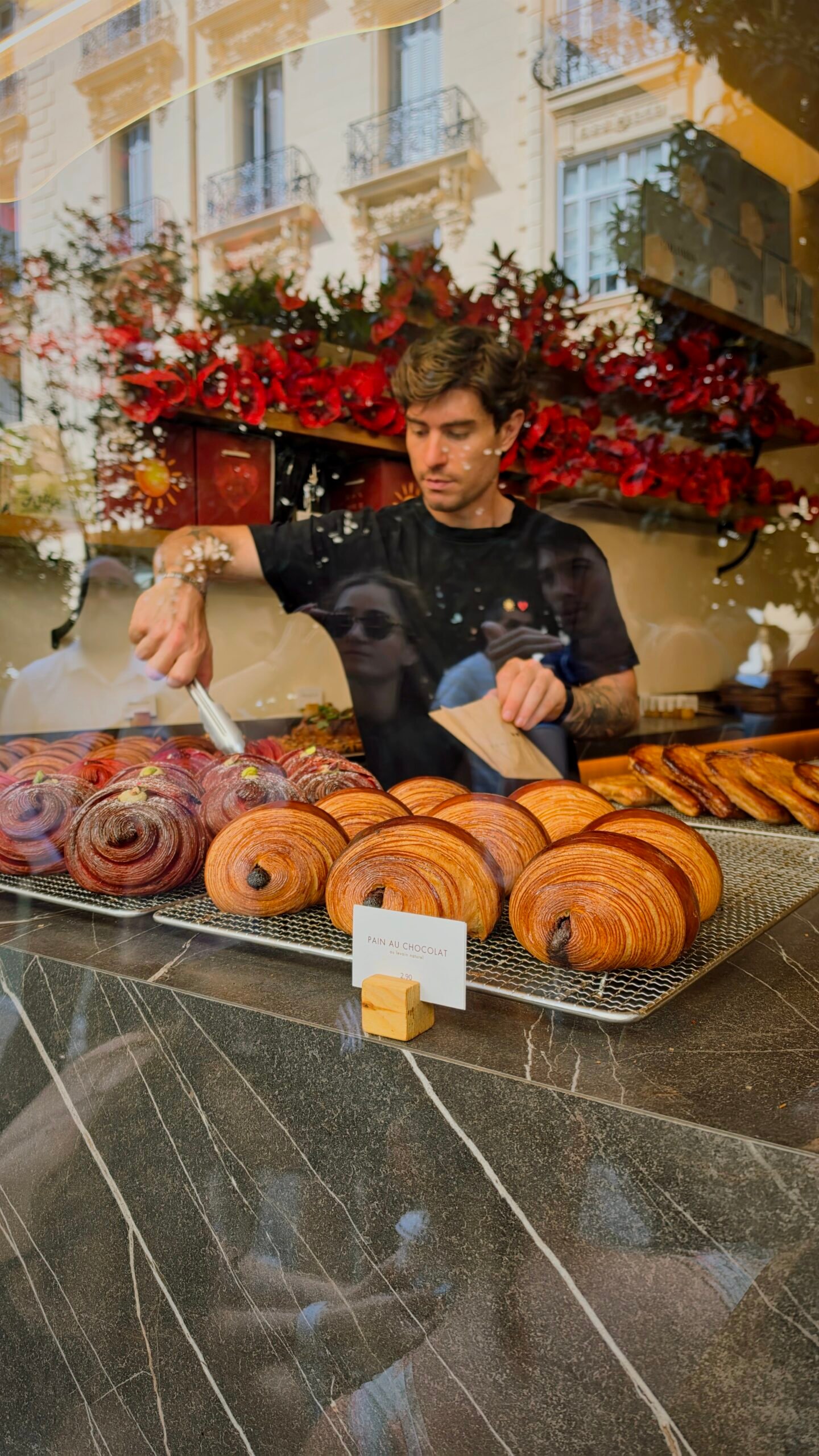
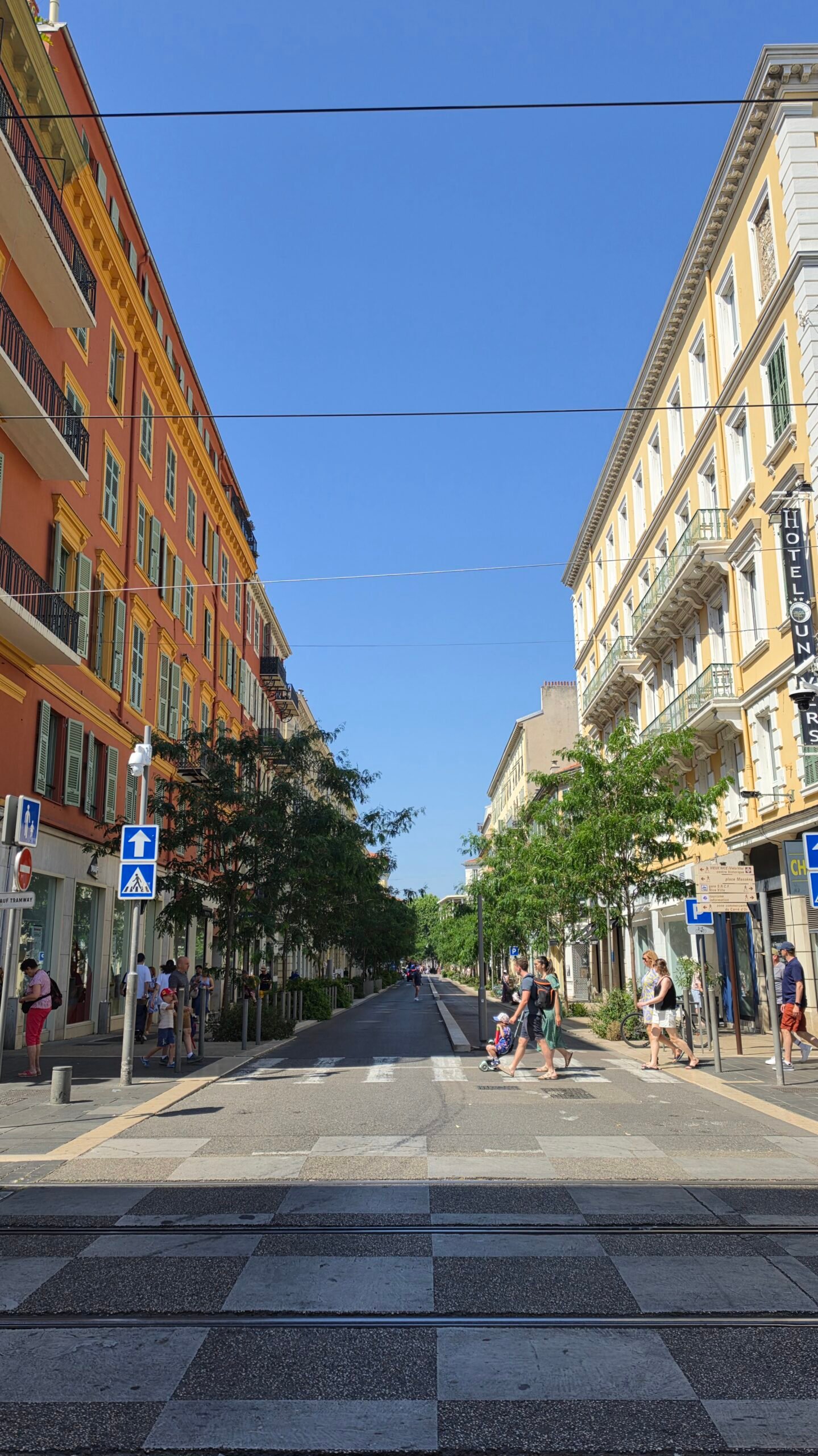
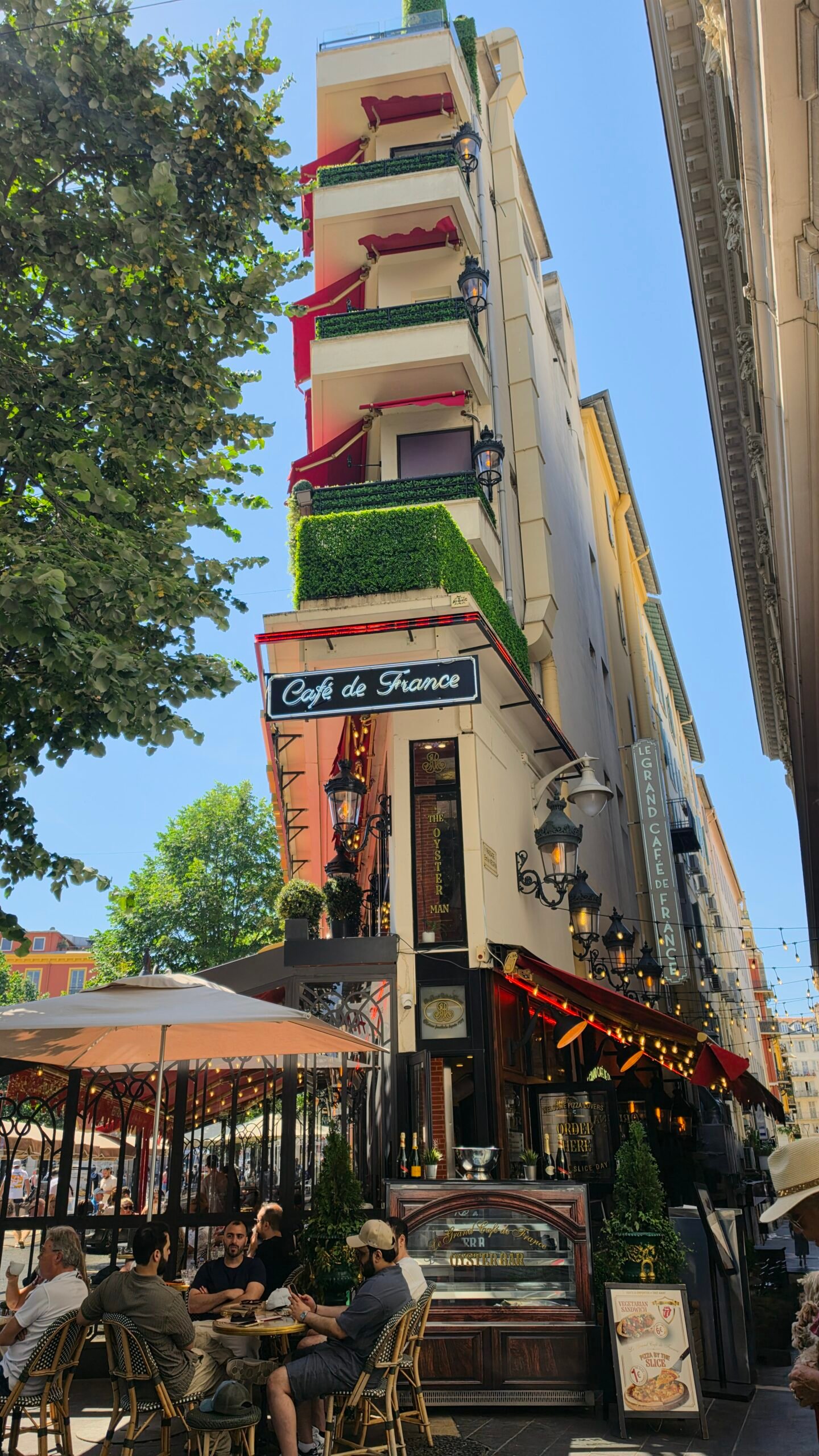
You start your morning with a coffee because you’ve found a café with a beautiful view. A little while later you walk past a bakery and decide you simply have to try one of the pastries you’ve been staring at through the window. By lunchtime you’re hungry again, and because you’ve spent the morning wandering through Old Town or walking the Promenade des Anglais, sitting down for something to eat feels well deserved.
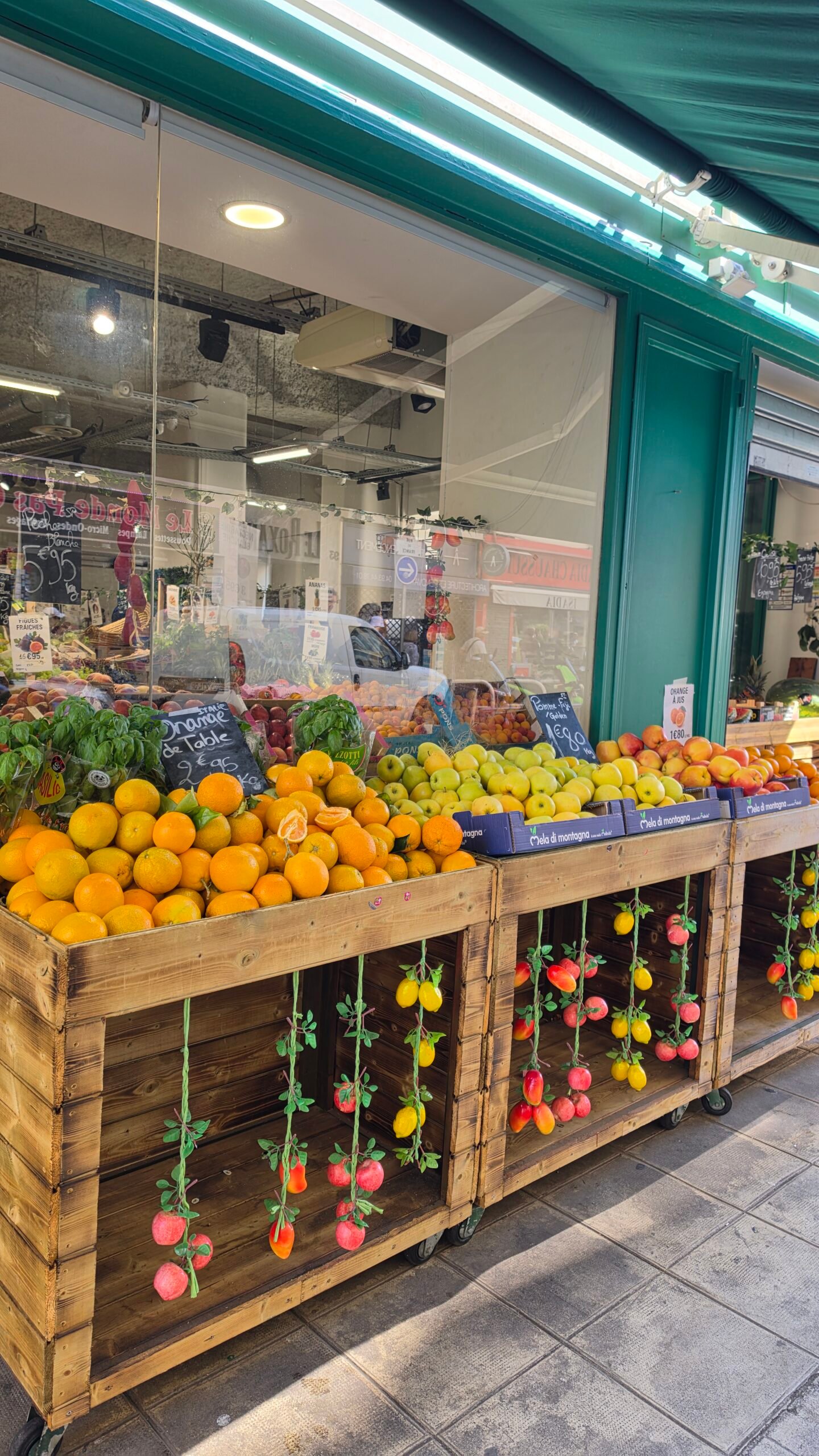
Later that afternoon it’s thirty degrees outside, so naturally an ice cream seems like a perfectly reasonable idea. You buy several bottles of water because you’ve been exploring for hours. Maybe you stop for another coffee or some cocktails, while people-watching. Before dinner you’ve wandered through a market and bought fresh fruit to take back to your room.
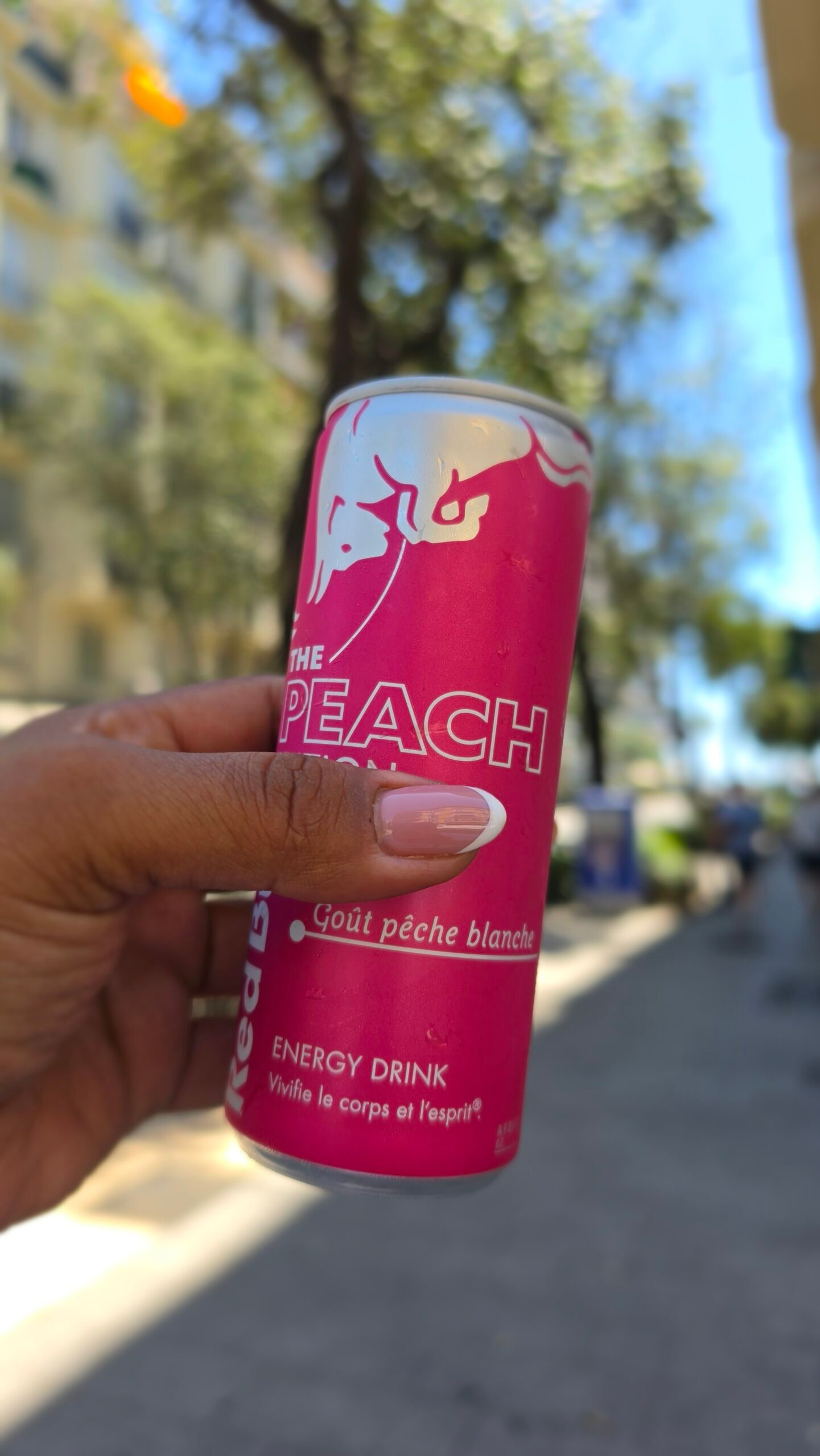
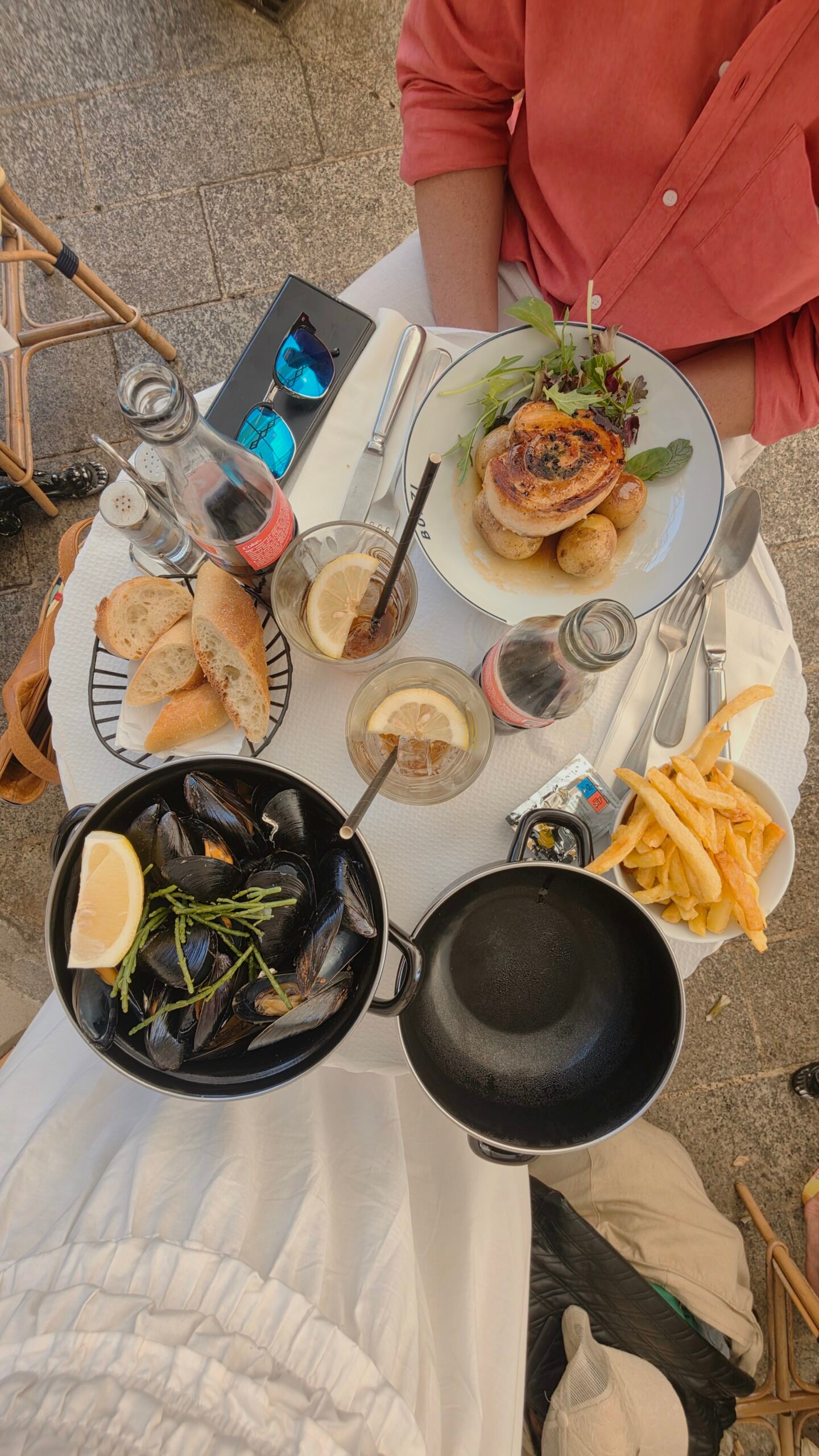
None of those purchases feel extravagant.
In fact, most of them feel like exactly the sort of things you should be doing while you’re on holiday.
But when you look back over your bank statement at the end of the day, or in our case, at my husband’s Excel sheet with each day’s expenses categorised, itemised and totalled, you suddenly realise that food wasn’t one expense.
It was twenty little expenses for one day.
That’s what caught us off guard.
One decision that softened the blow considerably was booking an aparthotel instead of a standard hotel room.
At the time, we chose it quite intentionally because we already had a feeling that food in Nice was going to be expensive. Having a kitchen meant we could prepare something at home on certain days and save a little money when we wanted to.
One of the unexpected advantages was that there were butchers in the Old Town that looked good and seemed relatively affordable compared to eating out. There were also a few spice markets where you could choose from a huge selection of spices. To this day, I still regret not buying the truffle salt as a souvenir to bring home.
Some mornings we’d make breakfast before heading out. Other days we’d buy fresh bread, cold meats and cheese from the supermarket and make sandwiches to take with us to the beach. We often bought fruit from little market stalls and packed it into our beach bag for the afternoon.

Did we still eat out?
Absolutely.
That was part of the experience.
We hadn’t travelled all the way to the South of France to spend every evening cooking in our apartment. Oh no!
But having the option to mix restaurant meals with simple meals at home gave us so much more flexibility. More importantly, it meant we could choose where we wanted to spend our money instead of feeling like we had to spend it.
That’s probably the biggest lesson we brought home with us.
Saving money isn’t always about spending less.
Sometimes it’s about spending intentionally.
I’d far rather make a sandwich one afternoon if it means I can justify spending an entire day at a beautiful beach club the following day, eating and drinking without feeling guilty about it.
I’d rather skip an overpriced breakfast if it means I can wander into a little leather shop later that afternoon and buy something I’ll still be using ten years from now.
Speaking of leather shops…
I don’t think enough people talk about shopping in Nice. Everyone talks about shopping in Rome, Italy, and rightfully so. But Nice, France has some great gems too!
Everyone talks about the beaches.
Everyone talks about the old town.
Everyone talks about the day trips.
Hardly anyone mentions that if you enjoy shopping, particularly for leather goods, you’re probably going to need a little more room in your suitcase than you originally planned.
There are leather shops everywhere.
Now, before you picture rows of identical tourist stores selling the same handbag in twenty different colours, that’s not what I’m talking about.
Of course those shops exist.
But hidden amongst them are these beautiful little stores where everything feels handcrafted. Handbags. Wallets. Belts. Shoes. The kind of places where you walk in “just to have a look” and suddenly forty-five minutes have disappeared because you’re trying to convince yourself that handbags and clothes are the most useful souvenirs.
“Shop No.5” has my heart forever and I have zero regrets!
Are Beach Clubs in Nice, France Worth the Money?
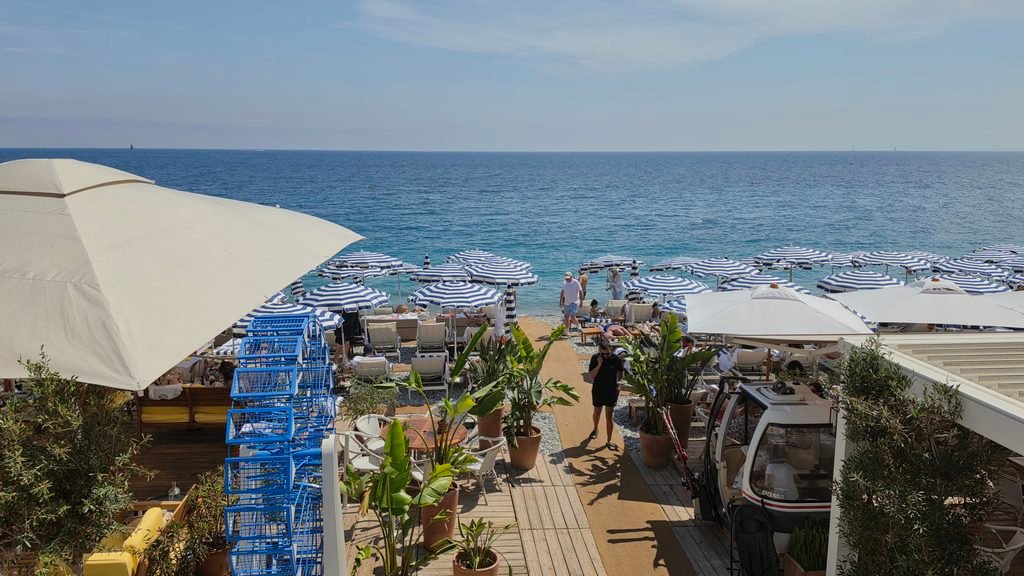
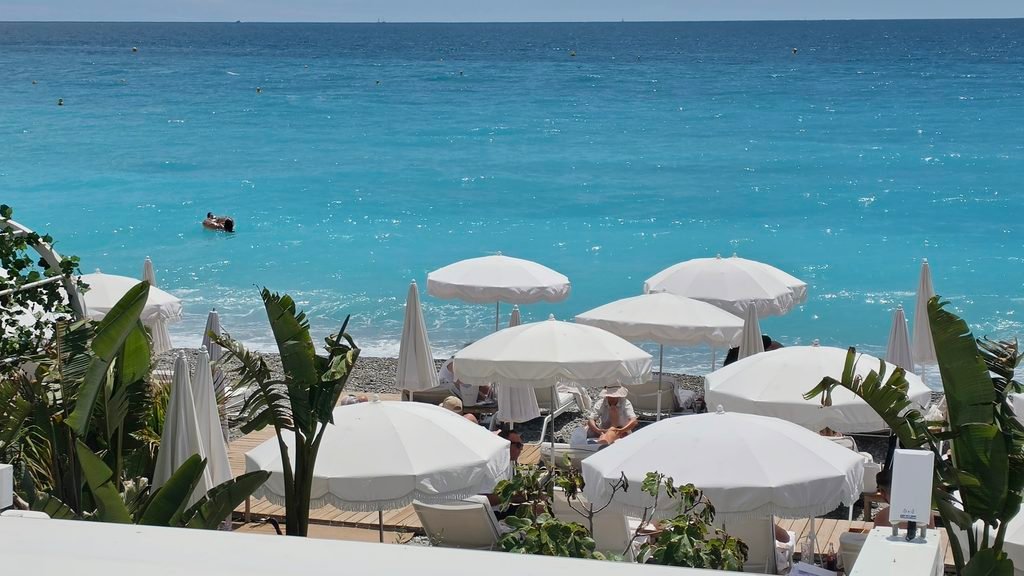
There was another area where we very deliberately chose to spend our money, and that was the beach clubs. If you’ve read Part One, you’ll know that I said Nice is much more of a Mediterranean holiday than a sightseeing holiday, and I think the beach clubs are a big part of that experience. You can absolutely spend your days on the public beaches, and we did. But there is something about settling into a lounger, having lunch brought to you, being able to swim without worrying about where you’re going to put your things and spending an entire afternoon doing absolutely nothing that feels very South of France.
We visited Ruhl Plage in Nice and L’Effet Mer Plage in Antibes, and both were lovely. I don’t think you necessarily need to visit a beach club every day, particularly if you’re travelling for more than a few days, because that would get very expensive very quickly. But I do think it’s worth budgeting for at least one or two beach club days if that kind of holiday appeals to you. We treated those days as an experience rather than simply paying for somewhere to sit on the beach, and when I look back at what we spent, I don’t regret it at all.
That said, I want to repeat something from Part One. It really matters when you’re trying to work out your budget. Beach club prices are subjective too. What I consider expensive might be reasonable to someone else. Prices depend on the beach club, its location, and the experience you want. We enquired about two different beach clubs in Monaco and quickly realized that one of them was a world we had no business being in. You know, Posh posh styles!
We arrived in Monaco with every intention of going to a beach club, but by the time we’d done a little bit of sightseeing and made our enquiries, it was already getting late in the day. And, obviously, the day hadn’t gone exactly according to plan. Do they ever when you’re travelling?
The second beach club we’d enquired about was actually in a similar price range to what we’d seen in Nice and Antibes, so it wasn’t that it was outrageously expensive. But at that point, we decided we’d rather just head to the public beach at Larvotto instead. Which, as it turns out, was quite an experience of its own.
We hadn’t taken our towels with us because we’d planned on being at the beach club. Silly us. What were we thinking? There was one shop on the beach selling towels, and they were like €15. Now, I know that’s not exactly a fortune, but we were too cheap to spend €15 on a towel we didn’t actually need. So, what did we do? Well, my friends, we laid down on the stoney shore. Yes, this was a pebble beach.
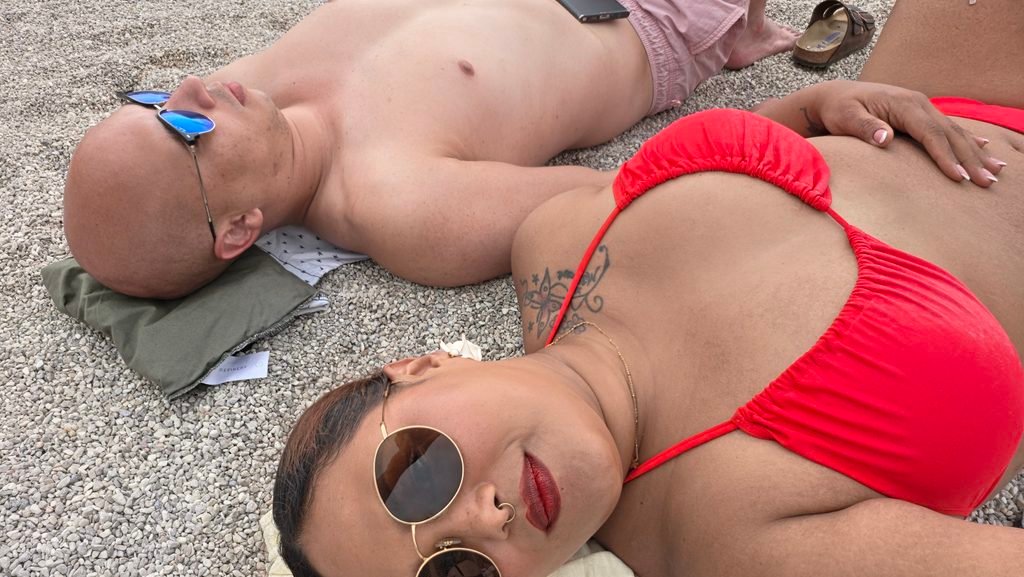
And then it started raining!
Remember how I said we were too cheap to buy the towel? Well, we ended up getting dressed with our wet bodies and getting on the train back to Nice exactly like that. Wet. No towel. On the train. It was funny, but it was not fun. LOL. Just thinking about it now makes me laugh, and almost cry at the same time.
And speaking of towels, this is one of those little things worth knowing if you’re planning on spending a few days at the beach. Beach club chairs can cost anything from €30 to upwards of hundreds of euros per person, depending on where you are along the Côte d’Azur. The beach clubs we went to were around €35 per chair, per person (including umbrellas). Some beach clubs charge separately for umbrellas, and all of them charge separately for towels.
We ended up renting beach towels from our accommodation instead, which cost €10 per towel for the entire duration of our stay. We simply hung them out to dry every day and took them along whenever we went to the beach or a beach club (and yes, we travelled with the towels to Antibes, we learned a lesson from Monaco). It was a small thing, but it meant we weren’t adding another €10 or whatever the beach club happened to be charging each time we wanted a towel.
For us, the beach clubs were worth it. Not every day, and definitely not at any price, but a couple of afternoons spent doing very little, with a lounger, lunch and the Mediterranean right in front of us? That was money we were happy to spend.
How Much Does It Cost to Get Around Nice and the Côte d’Azur?
This is something I think is worth remembering when you’re budgeting for Nice, France. You don’t have to spend money simply because you’re in the South of France. There is a very easy trap to fall into where everything starts feeling like an experience you need to pay for. Beach clubs, boat charters, restaurants, shopping, day trips, cafés, cocktails, museums, taxis. Before you know it, you’ve spent a small fortune simply because you didn’t want to feel like you were missing out.
We found that some of our favourite parts of the trip cost us very little. Walking around Old Town didn’t cost anything. Wandering along the Promenade des Anglais was pleasant. We ate pizza on the public beach and explored neighbourhoods to see what was around the next corner. Nice, France is a fantastic city for that. You can spend an entire afternoon walking without feeling like you’re wasting your time. There is always another little street, shop, café or building to look at, and because the city is so walkable, you don’t constantly feel like you need to get into a train, taxi or bus to get somewhere interesting.
Transport was another area where we saved money simply by doing a little research before we left. If you’re flying into Nice, please don’t make the mistake of automatically assuming you need to hire a car or take a private taxi from the airport. We almost did, and then discovered that there is a train running directly from the airport into the city. It’s inexpensive and incredibly convenient, particularly if you’re staying somewhere central.
There is one little detail about that train that I think is worth knowing because it is exactly the kind of thing that can make you unnecessarily spend more money when you’re travelling. We downloaded the relevant app (search “Lignes d’Azur Tickets” in Google Play) and bought our tickets online for €1.70. The exact same ticket bought from the airport booth was €10. That’s a big difference! Now I know that ten euros isn’t going to bankrupt anyone on holiday, but when you’re travelling for a week or more and making dozens of small decisions about where to spend your money, these are the kinds of savings that add up.
Do You Need a Travel Pass for the Côte d’Azur?
There are travel passes that cover most of the popular towns, with 3-, 7- and 14-day options. The one we bought was the Pass SudAzur from Zou. From what we could find during our research, these couldn’t be purchased online and were only available at physical Zou offices. We bought ours because, at the time, we genuinely thought we were going to do all the day trips we had planned. And had we stuck to that itinerary, it actually would have been very good value. The problem was that we didn’t stick to the itinerary.
That was actually one of the things I wish we’d thought about more carefully when we were planning our itinerary. I originally had nine towns on our list because, in my head, we were in the South of France and this was our opportunity to see as much of the Côte d’Azur as possible. The problem was that every day trip came with transport costs, food, time spent getting there and, eventually, the cost of being completely exhausted by the time we got back to Nice. In some ways, maybe that’s the point of travelling. But on this holiday, I think we just wanted to be vacationers, instead of “travellers”.
After we’d visited three towns, we changed our minds about the rest of the itinerary. We decided we’d rather spend the money and the time enjoying Nice than constantly paying to leave it. We had already bought the pass, so by the time we changed our plans, we had essentially made it poor value for ourselves. Had we paid for the two day trips we actually took individually, plus the attempted third trip that didn’t quite work out, we would have spent less. But if we’d followed our original itinerary and visited all those towns, the pass would have been well worth it. So, in hindsight, the lesson for us wasn’t that the pass wasn’t worth buying. It was that we probably shouldn’t have planned quite so many day trips in the first place.
I think a fuller itinerary isn’t always a better itinerary. Sometimes you simply can’t see it all, and seeing less can actually result in a better version of your holiday. I suppose this is another one of those things that is completely subjective and comes down to the kind of traveller you are. Some people will look at nine towns on an itinerary and think, “Absolutely, let’s do it.” And other people will get to the third town and think, “Actually, I’m quite happy just sitting in Nice.”
So, do you need a travel pass? Well, I think that really depends on how many day trips you realistically plan to take from Nice. I’d look at which towns you want to visit, work out the individual journey costs, and then look at how the pass fits into your actual itinerary. If you’re spreading your day trips over five days with rest days in between, for example, a three-day pass may not necessarily make sense. But if you’re planning to get most of your day trips “out of the way” over three consecutive days, then a three-day pass could work really well for you. And if you’re only planning on doing one or two day trips, I’d definitely compare the individual fares with the price of the pass before buying it. For us, it all came down to the fact that we thought we’d take a lot more day trips than we actually did. So perhaps that’s the real question to ask yourself before buying one: how many day trips are you realistically going to take on your holiday in Nice, France?




Where We Would Spend Our Money in Nice, France Again
By the end of our trip, I had a much better idea of where I think the money is worth spending in Nice and where I really don’t think you need to. I’d happily pay for another beach club day. I’d happily spend money on a really good meal if I’d found somewhere that genuinely impressed us. I’d happily budget for shopping because that is something I personally enjoy, and I’d absolutely pay to stay somewhere with a kitchen again because the flexibility was worth far more than the small amount we saved on food.
What I wouldn’t do is try to visit nine towns in one trip simply because they’re accessible by public transport. I wouldn’t spend money on taxis from the airport when there’s a perfectly good train. I wouldn’t assume that every meal needs to be eaten at a restaurant, and I certainly wouldn’t feel guilty about buying supermarket food and making sandwiches for a beach day. You’re still in the South of France. The Mediterranean is still outside your window. Nobody is taking your passport away because you ate a homemade sandwich for lunch.
The Little Expenses That Add Up in Nice, France
There are extra costs that don’t fit a budget category and always seem to drain money.
Public bathrooms, for example. I could cry over this. And it was even worse in Rome, Italy!
Carry small change at all times; many restrooms charge to use. It’s not a huge amount of money, but there is nothing quite like desperately needing a bathroom and needing to pay to use it.
The other thing I would be careful about is buying everything from the first place you see. This applies particularly to food and the restaurants and bakeries that become famous on TikTok. I fell down that rabbit hole before our trip too, and while there are definitely some great recommendations on social media, popularity doesn’t automatically mean something is worth the price.
We found that if you walked a little further away from the main tourist areas, you could often find somewhere that was just as good, sometimes better, for considerably less. The same thing applies to restaurants. If you’re standing directly outside a major attraction, surrounded by hundreds of tourists, there’s a very good chance you’re paying partly for the location. Walk a few streets away and the entire experience can change.
This is probably where all that research I did before our trip ended up being useful. I wasn’t simply looking for the places with the most views or the prettiest videos. I was reading reviews, comparing prices, looking at what people actually ordered and trying to work out whether the experience justified the cost. Sometimes it did. Sometimes it really didn’t.
So, How Much Should You Budget for Nice, France?
I think this is the biggest takeaway with regards to budgeting for Nice. Don’t go there expecting to spend as little as possible, because I don’t think that’s the kind of holiday Nice naturally lends itself to. At the same time, don’t assume that you need an unlimited budget to enjoy it. You can have an expensive beach club day and then eat sandwiches on the public beach the following afternoon. You can spend money on a beautiful dinner and have breakfast in your apartment the next morning. You can splurge on something you genuinely love and then walk everywhere instead of paying for taxis.
For us, that balance worked.
We weren’t trying to travel on a shoestring, but we also weren’t interested in spending money simply for the sake of saying we’d done something.
If I were planning the exact same trip again, I’d probably give ourselves a little more spending money than we did the first time. Not because we were short of money or because we felt like we couldn’t afford the things we wanted, but because Nice is one of those destinations where there are so many little opportunities to spend money that you need to leave yourself some breathing room.
And if you think you’ve budgeted enough, I’d probably add a little extra.
Because somewhere between the €12 pizza, the €70 restaurant bill, the beach club, the pastry you absolutely had to try, the leather shop you “were only going to look at” and the towel you might need in Monaco, your budget can disappear rather quickly.
Would I spend it all again?
Honestly, yes.
Because when I think about the money we spent in Nice, I don’t remember the euros. I remember what we got in exchange for them.
I remember sitting beside the Mediterranean.
I remember the long walks through Old Town.
I remember our beach club days.
I remember finding little shops we hadn’t planned to visit.
I remember eating sandwiches on the beach.
I remember the abest mango sorbet i’ve eaten in my life.
And perhaps that’s the best way to think about budgeting for Nice. Don’t merely ask, ‘How much money will I need?’ Consider the kind of holiday you want. This reveals your budget more clearly than any generic travel calculator.
For us, Nice was never going to be the kind of destination where we counted every euro. It was about knowing when something was worth paying for and when it really wasn’t. Once we figured that out, the money became much less stressful and the holiday became much more enjoyable.
And that’s probably the biggest thing I took away from the trip.
Nice, France isn’t necessarily a destination where you need to spend more.
You just need to know what you want to spend your money on.
Catch you on the flippie for more South of France adventures in Part three!
With love,
Keep #roamingwiththekolbes